Managing emotions during childhood plays a crucial role in a child’s overall development. Yet, it’s often a challenge for both parents and educators. In this article, we’ll explore why emotional regulation matters so much and aim to offer a practical guide. Our goal is to help parents and educators support children in their emotional growth—because equipping kids with strong emotional tools is key to their future.
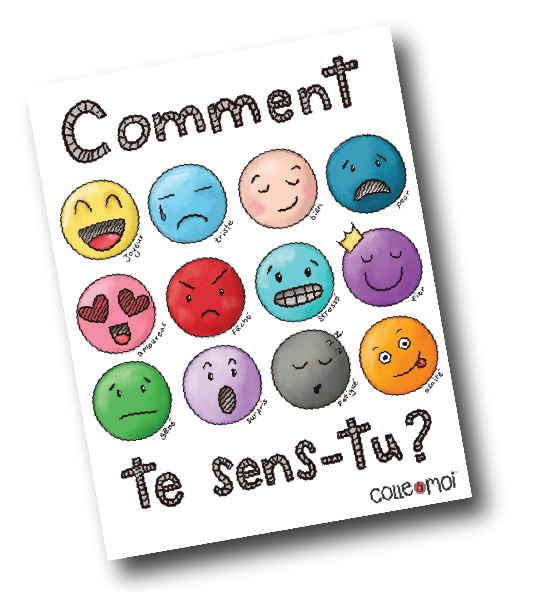
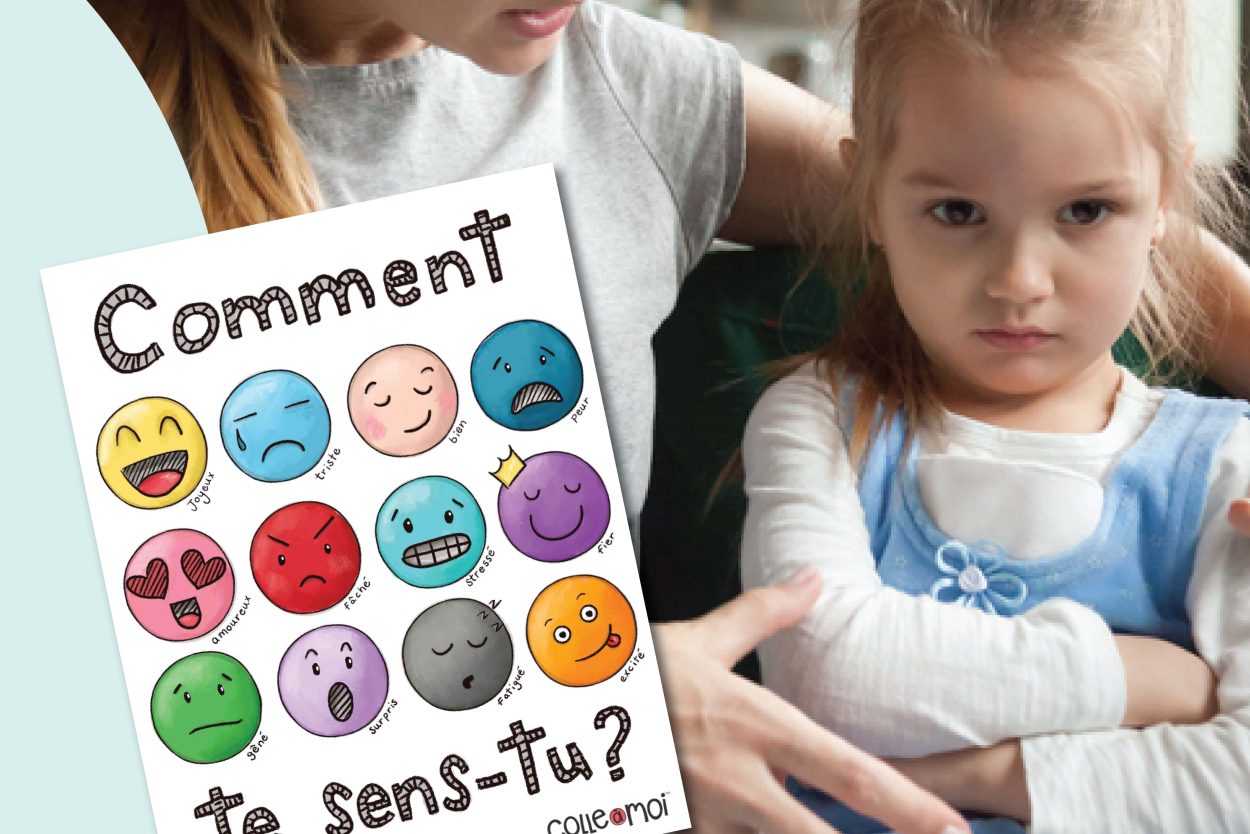
Annie created an illustration showing different emotions your child might experience.
This visual aid will help children identify what they’re feeling—and you can download the PDF version by clicking here.
Understanding Children’s Emotions
The Nature and Development of Emotions
Children’s emotions are a fundamental part of their social-emotional development. From a very young age, infants display emotional responses that evolve over time. A child’s emotional development is influenced by biological, environmental, and social factors. Primary emotions like joy, sadness, anger, and fear appear early in life, while more complex secondary emotions develop later as children gain social skills.
The Impact of Emotions on Well-being
Learning to manage emotions in childhood is essential for overall well-being. Unregulated emotions can significantly affect a child’s mental and physical health. Children who learn to recognize and appropriately express their emotions are more likely to develop healthy self-esteem, which positively influences their social and emotional behaviors.
How to Help Your Child Learn to Manage Their Emotions
Emotional regulation isn’t innate—children learn it gradually, with the caring support of the adults around them. Here are simple and effective strategies to help your child develop this essential skill.
Naming and Recognizing Emotions
According to Naître et Grandir, the first step in helping a child manage their emotions is teaching them to name and recognize what they’re feeling. Here are a few ways to support them:
- Talk about emotions from an early age.
Introduce simple words for basic emotions like joy, sadness, anger, and fear. You can also describe what they’re experiencing:
“You’re sad because your toy broke,” or “You’re angry because you didn’t get what you wanted.” - Use body language as a teaching tool.
Show how facial expressions and posture are linked to emotions. Doing this in front of a mirror can make it even more fun and concrete. Name what you observe in your child:
“You were yelling and clenching your fists when your sister knocked down your block tower—you were angry,” or “You were shaking and holding onto me when the dog ran toward you—you were scared.” - Use visual supports.
Books, images, posters, and games showing different facial expressions can help children identify emotions. Point out visual cues—furrowed brows when someone is angry, tears when someone is sad, a smile when someone is happy, wide eyes when someone is afraid. To get your own printable version of our emotion chart, click here. - Introduce more complex emotions.
Feelings like jealousy or guilt can be discussed as early as age 2 or 3. For instance, if your child hits their sibling and later seems uncomfortable, you might say:
“You don’t feel good now because you saw that it made them sad, right?”
This helps them recognize and name more nuanced emotions.
Validating Their Feelings
Validating your child’s emotions doesn’t mean agreeing with every behavior—it simply means acknowledging what they’re experiencing.
Let them know their feelings are normal: “It’s okay to feel angry,” “I understand that you’re sad,” “It can be scary the first time.”
This reassurance helps children feel understood, safe, and more willing to learn healthier ways to react.
Teaching Calm-Down Strategies
Once a child can recognize their emotions, it’s helpful to give them tools to calm themselves. These strategies may include:
- taking slow, deep breaths
- stepping away from the situation for a moment
- spending time in a calm corner with soothing objects
- using a calming sensory label to guide breathing exercises or release excess energy
- asking for a hug
- using words to explain how they feel
Introduce these techniques when your child is already calm—not only during a meltdown. This way, they’ll feel more confident using them when emotions run high.
Leading by Example
Children learn a great deal by watching the adults around them. Talk openly about your own emotions so they see that feelings are normal—for everyone.
For example, if you were frustrated earlier, you might say:
“I was angry earlier because I lost something important. It made me impatient, but now I feel better.”
This shows that emotions come and go, and that there are healthy ways to manage them.
Using Positive Reinforcement
When your child successfully names a feeling or uses a calming strategy, take a moment to recognize it:
“You calmed yourself down with your breathing—I’m proud of you,”
“You told me you were sad—that was a great way to express your feelings.”
Offering comfort, active listening, and a reassuring presence strengthens your child’s confidence and supports their emotional development.
What Are the Benefits of Healthy Emotional Regulation in Children?
When a child understands what they’re feeling and knows how to respond, it doesn’t just improve their day-to-day life—it also strengthens your relationship with them. The positive effects show up at home, at school, and in their social interactions. Here are some concrete benefits:
Higher Self-Esteem
A child who can identify their emotions and respond in a healthy way develops a sense of competence, which boosts their self-esteem. They feel capable of handling challenges and become more comfortable expressing their needs.
On the other hand, a child who struggles to understand their emotions may feel overwhelmed, guilty, or “wrong,” which can undermine their self-confidence. This confusion may lead them to avoid certain situations out of fear of failing or being judged.
Fewer Tantrums and Impulsive Behaviors
Poor emotional regulation can cause emotions like stress, anger, or fear to build up, leading to tantrums, aggressive behavior, anxiety, or conflicts with others.
By helping your child put words to what they’re feeling, you reduce that internal frustration. They’re less likely to explode when faced with disappointment or anger. They calm down more quickly and navigate difficult situations with greater ease—making everyday life more peaceful for everyone.
Better Focus and Academic Success
Strong emotions can easily distract children, causing them to lose focus in class, shut down, or avoid certain activities. When stress and unregulated emotions pile up, motivation and learning can become much harder.
But when emotions are understood and expressed appropriately, children can concentrate more easily and stay engaged in learning. They’re less disrupted by frustration, sadness, or anger and are better equipped to tackle academic challenges.
Stronger Mental Health
A child who can recognize and manage their emotions develops lifelong tools to cope with stress and maintain well-being. They learn to ask for help, adapt to change, and regulate their feelings in healthy ways.
In contrast, not knowing how to express or understand emotions can lead to internal buildup—causing increased stress, anxiety, withdrawal, or social difficulties. Over time, this can weaken mental well-being and make transitions or complex situations harder to navigate.
How to Support a Child’s Emotional Expression
Create a climate of trust
For your child to feel comfortable sharing what they’re feeling, they need to know their emotions will be welcomed without judgment. This starts with your attitude: stay calm during emotional reactions, listen attentively, and show them they can confide in you safely.
For example, if your child cries after an argument with a friend, you might say, “I see that you’re upset—do you want to tell me what happened?” Even if their reaction seems disproportionate, acknowledging their feelings helps them understand that their emotions are valid and that you’re there to support them.
Encourage verbal expression
As previously mentioned, putting emotions into words is a crucial step in learning to manage them. That’s why encouraging your child to talk about what they feel is so important.
Ask open-ended questions to help them explore their emotions: “What made you angry?” or “Why does this situation make you sad?” Sometimes, what looks like anger may actually be disappointment, rejection, or frustration—talking it through helps make that connection.
You can also share your own feelings in a simple, age-appropriate way: “I felt worried this morning because I had a lot to do, but now I feel better.” This teaches children that emotions are normal and can be expressed calmly.
Offer different ways to express emotions
Not all children feel comfortable expressing themselves verbally. Some may prefer drawing, playing, music, movement, or creative activities. For example, a child who feels angry might draw what they’re experiencing or reenact the situation using toys.
Others may need to move their body or punch a pillow to release tension.
These activities help them relax while making sense of what they feel. The key is to offer multiple options and support them without judgment, so they can discover the method that works best for them.
How Colle à moi Supports Parents in Their Daily Lives
Colle à moi helps parents simplify everyday tasks and reduce the stress of family organization. With personalized labels set for clothing, backpacks, lunch boxes, and everyday items, you can easily identify your children’s belongings—preventing losses, mix-ups, and arguments.
This gives you more time and energy to focus on what really matters: being present for your child, listening to them, and supporting them as they navigate their emotions.
With Colle à moi, staying organized becomes easier and more peaceful, allowing you to fully enjoy those precious family moments!
Frequently Asked Questions About Managing Emotions in Childhood
How can I help a child who struggles to express their emotions?
Sometimes children have difficulty putting their feelings into words. Several strategies can help:
- Practice active listening: Give them your full attention, avoid multitasking, and don’t interrupt. Show genuine interest in what they feel.
- Encourage “I” statements: Help them say “I’m angry” or “I’m sad” instead of expressing their emotions only through gestures or shouting.
- Offer creative activities: Drawing, writing, music, singing, arts and crafts, or role-playing give children alternative ways to express themselves.
For more resources, the Coffre à outils from the Quebec Committee for Youth with Behavioral Challenges provides many practical tips and techniques for supporting emotional expression.(Only in French)
How do I handle a public tantrum?
According to Naître et Grandir, feeling anger or disappointment is just as normal as experiencing joy, sadness, or fear.
During the tantrum:
- Approach calmly and speak softly to soothe your child. Let them express what they want or what is bothering them. For example, if they want a toy, you might say: “Oh, that toy looks really fun! What would you play with it?” Talking helps their excitement gradually decrease.
- Calmly explain that the toy cannot be bought today, but offer an alternative, like taking a photo of it to remember it later.
- If anger persists, name the emotion: “I see you’re really angry because you wanted that toy.”
- When possible, step away from the crowd. Being apart helps your child calm down without feeling ashamed, protecting their self-esteem.
- Stick to your decision. They need to learn, with your guidance, to accept “no” and handle the feelings that come with it.
After the tantrum:
- Once calm, help your child talk about what happened.
- Discuss together ways to express feelings more appropriately next time.
- Praise them for calming down and point out what they did well. This links effort to positive outcomes and builds confidence.
My child seems sad for no reason—what should I do?
Children’s emotions can sometimes seem mysterious. Observe their behavior carefully and encourage them to talk. Ask open-ended questions like, “What’s going on in your head?” or “What made you feel sad?” Sometimes sadness is linked to small frustrations or changes in their routine that may go unnoticed.
Providing reassurance and validating their emotions, even if the reason isn’t clear, is essential.
How can I set limits while validating my child’s emotions?
Setting clear boundaries for your child’s safety and well-being is necessary, but it can be done while acknowledging their feelings. Validating emotions doesn’t mean giving in to every demand—it shows them their feelings are heard and understood.
For example, if your child wants to play outside when it’s raining, you could say:
“I understand that you’re disappointed you can’t go out—it’s normal to feel frustrated. Let’s find a fun indoor activity to keep you busy.”
Here, you acknowledge their frustration while maintaining the rule.
Another example: if your child refuses to share a toy with a friend, you might say:
“I see you don’t want to share your toy—it’s normal to want to keep it. But at school, we need to learn to share so everyone can play together.”
This approach helps children understand that their feelings are valid while teaching patience, respect for rules, and frustration management.